
Building Communities Through Volunteer Leadership: Lessons from the WRJ Wilkenfeld International Women’s Leadership Seminar
London, United Kingdom | 21 June 2026
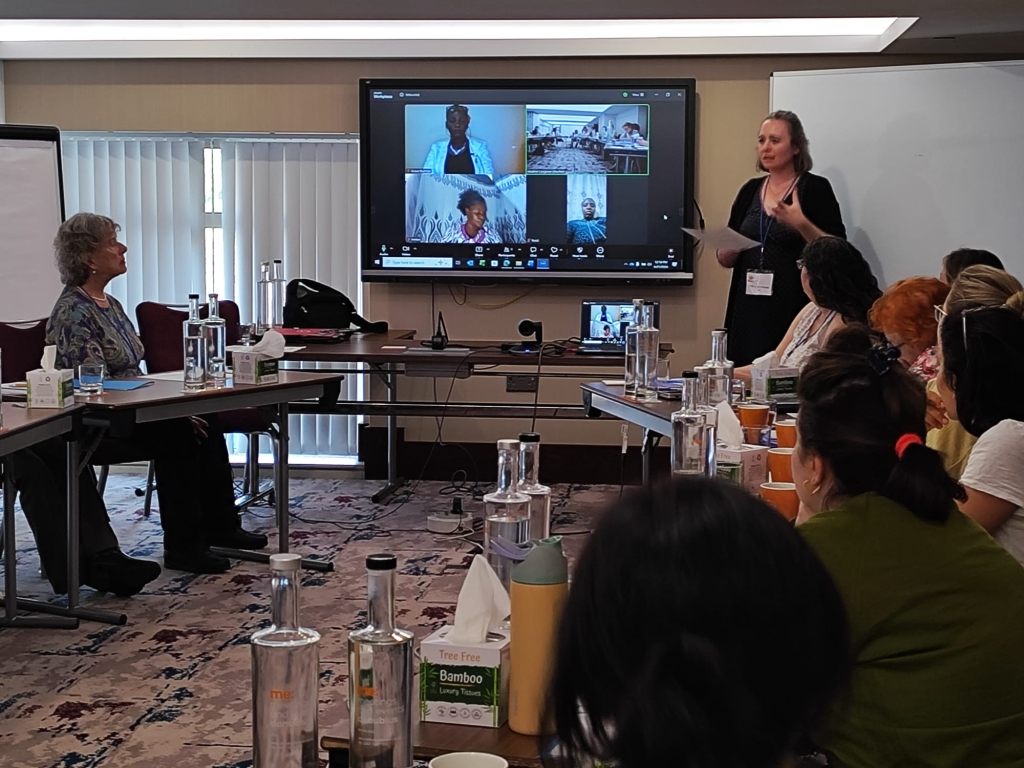
The 2026 Women of Reform Judaism (WRJ) Wilkenfeld International Women’s Leadership Seminar opened with a powerful reminder that leadership begins with relationships. Fourteen women from Progressive Jewish communities across England, Italy, Hungary, the Netherlands, Israel, South Africa, Brazil, Guatemala, China, and other regions gathered in London, while three women from Uganda participated virtually through an innovative hybrid model that ensured distance was not a barrier to learning, collaboration, and meaningful global connection.
The seminar, organized through a partnership between the World Union for Progressive Judaism (WUPJ) and Women of Reform Judaism (WRJ), brought together women committed to strengthening Jewish leadership, building resilient communities, and creating lasting global partnerships.
Opening the seminar, Sally Klein-Katz warmly welcomed participants with a message that set the tone for the entire program:
“We matter to each other, and we care for each other.”
She reminded participants that leadership is about creating spaces where people study Torah together, learn from one another, build meaningful relationships, and continue supporting each other long after the seminar ends. Through personal storytelling, women from different countries shared their journeys, challenges, and aspirations, creating an atmosphere of trust, empathy, and genuine community.
A central theme of the first presentation was Building Communities Through Volunteer Leadership. Sally challenged participants to think differently about volunteerism, emphasizing that communities are not built by buildings or budgets but by people who willingly choose to care for one another.
Drawing on Jewish values such as Areivut (Mutual Responsibility), Chesed (Loving Kindness), Kehillah (Community), and Tikkun Olam (Repairing the World), participants explored how every individual has a meaningful role in strengthening community life.
One of the most profound lessons was that people do not volunteer simply because they are needed, they volunteer because they want to belong, contribute, feel valued, and live out their values. Strong volunteer engagement begins with a personal invitation, clear purpose, appreciation, trust, and opportunities for meaningful participation.
The seminar also emphasized the importance of creating communities where every voice is heard. Leaders were encouraged to invite members into conversations, listen to their ideas, evaluate what works and what does not, and allow people to become active partners in shaping the future of their communities.
Special attention was given to involving children in Jewish life from an early age. Rather than being passive observers, children should actively participate by helping prepare challah, reciting blessings over handwashing, Kiddush and challah, participating in Shabbat services and daily prayers, listening to and sharing Jewish stories, learning Jewish values, and embracing Jewish traditions, including kosher living. These experiences help pass Judaism from one generation to the next while nurturing confident future leaders.
Participants also reflected on common challenges faced by volunteer organizations, including relying on the same few individuals, failing to appreciate volunteers, and assigning tasks without creating ownership. Instead, healthy communities intentionally develop leadership by helping people grow from observer to helper, volunteer, leader, and ultimately community builder.
For the Ugandan delegation, these lessons resonated deeply. As leaders working to strengthen Progressive Judaism through Jewish youth camps, women’s leadership initiatives, and community development programs, the seminar reinforced the importance of building inclusive communities where every person feels welcomed, valued, and empowered to contribute.
Although separated by thousands of kilometers, digital technology made it possible for Uganda to learn alongside women from across the world, demonstrating that leadership has no borders when communities choose connection over limitation.
The first day of the Wilkenfeld Seminar served as a powerful reminder that the future of Jewish communities depends not only on institutions but on leaders who intentionally build belonging, inspire volunteerism, invest in future generations, and create spaces where everyone has the opportunity to participate and thrive.